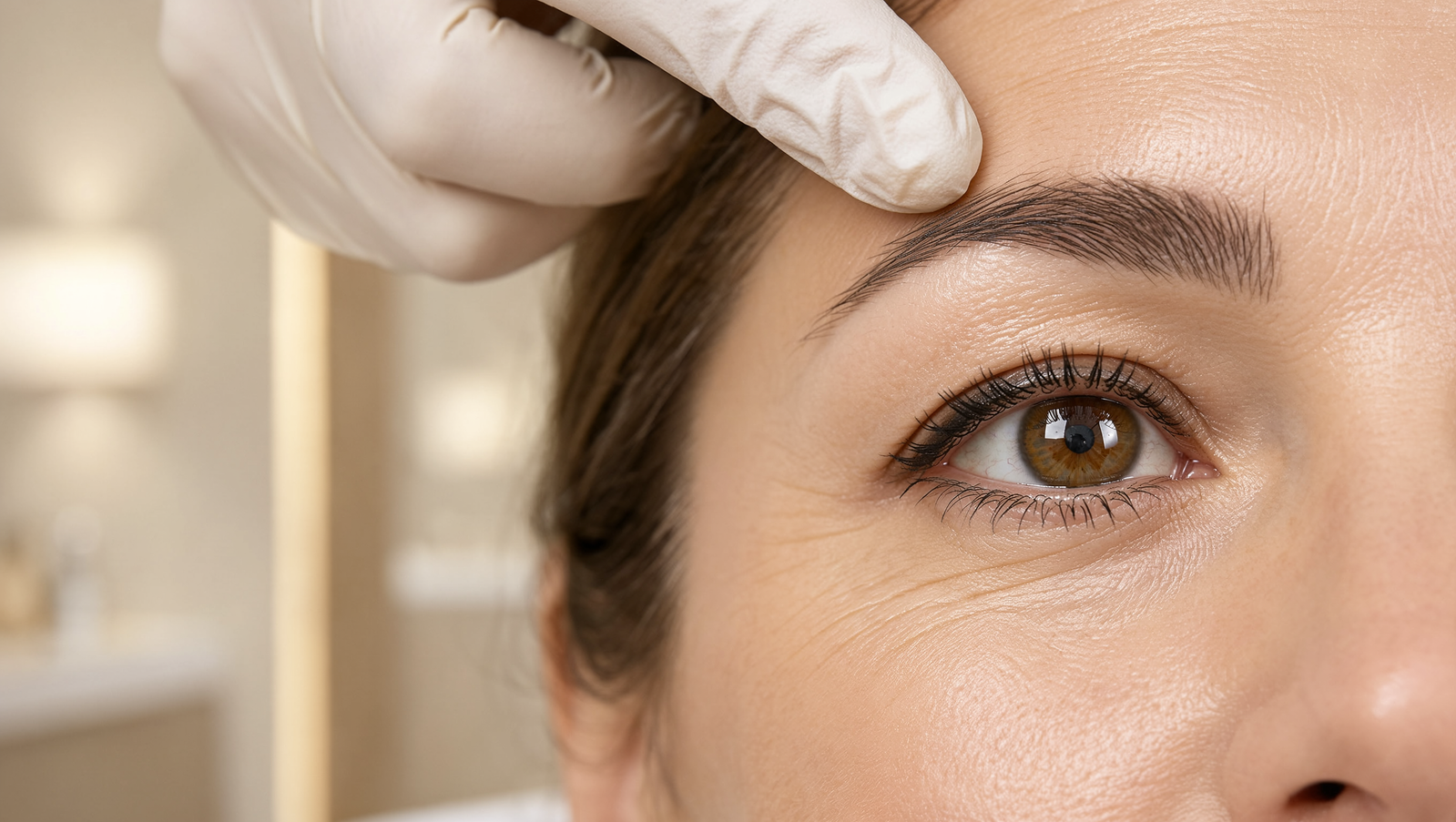
"My eyes look tired, and people keep asking if I am sleepy." Many patients start the conversation this way, and most arrive already convinced they need eyelid surgery. Sometimes they are right. Sometimes the problem is somewhere else entirely, and eyelid surgery alone will not fix it.
A "droopy eyelid" describes a look. It is not a diagnosis.
Four causes that can look the same
- Excess upper eyelid skin: with age the skin loses elasticity and gathers over the lashes, which can make eyeliner or eyeshadow hard to apply.
- Fat puffiness: the fat that cushions the eye pushes forward, creating bags in the upper or lower lid.
- A weak eyelid-lifting muscle: here the lid margin itself, the edge that carries the lashes, sits lower than normal and covers part of the pupil. This is different from excess skin and is treated differently.
- A low brow: as the brow descends with age, it pushes the eyelid skin down, so the lid looks heavy even though the problem is above it.
Try this in the mirror
Look straight into a mirror and relax completely. Place a finger under your brow and gently lift it to where it looks natural to you. If the eyelid looks much better, the brow is part of the problem. Then look at the lid margin: if it still covers part of the coloured iris after lifting the brow, there may be weakness in the eyelid-lifting muscle.
This is not a diagnosis, but it shows why we examine the forehead, brows and eyelids together rather than looking only at the excess skin.
Why the right diagnosis matters
If the brow is low and we only remove eyelid skin, the brow can drop further over time and the look can become heavier or harsher. If the problem is the eyelid muscle, removing skin will not lift the lid margin, and the tired look will remain.
What are the options?
- Eyelid surgery: removes excess skin and treats fat puffiness, through an incision hidden in the natural upper-lid crease, or below the lashes or inside the lid for the lower eyelid.
- Correcting a weak eyelid muscle: a different procedure that tightens the muscle itself, and can be done together with eyelid surgery.
- Brow lift: when a low brow is the main cause or part of it.
- Botox: in very mild cases it can give a slight lift to the tail of the brow, but it does not remove excess skin or treat muscle weakness, and the effect is temporary.
In many cases the answer combines more than one procedure, depending on what the examination shows.
When it is about vision, not only appearance
A lot of excess skin or a weak eyelid muscle can block the upper part of your field of vision. People notice they keep raising their brows to see clearly, or feel forehead fatigue at the end of the day. In that case the procedure is functional as well as cosmetic. If an eyelid droops suddenly, on one side only, or with double vision, see a doctor straight away, because the cause may not be cosmetic.
Before and after surgery
- We ask about dry eyes, thyroid disease and blood-thinning medicines, as they affect surgical planning.
- Swelling and bruising are normal in the first week; cold compresses and sleeping with your head raised help.
- Stitches are usually removed within about a week, and most people return to social activities within one to two weeks.
- The upper-lid scar sits in the natural crease and becomes barely visible over time.
Questions we hear often
Will my features change? The goal is to look rested, not different. We do not change the shape of the eye; we remove what is weighing it down.
How long does the result last? Eyelid surgery results last many years, although the face keeps ageing naturally.
What is the right age? There is no set age. Some people have inherited puffiness that appears in their twenties; others start to see loose skin after forty. The cause matters more than the age.
If your eyes look tired, start with a diagnosis before deciding on a procedure. Book a consultation so we can examine your eyelids and brows together and build the right plan for you.